Cuban Food, What to Expect.
Leave a commentJuly 12, 2024 by vivalafiona
Food is an important part of the travel experience and Cuba will not disappoint. Like its music, Cuban food is a rich blend of Spanish, African and Latin American influences. Climate and geography allow for almost anything to grow on the mainland and I promise you will taste some of the best avocado’s, coffee and mangos found in the world. Tropical fruit and seafood is in abundance during the summer months and a wide selection of vegetables, including the most deliciously sweet tomatoes, appear in the farmers markets in the cooler less humid months. Most of the produce is organically grown and permaculture methods are practised.
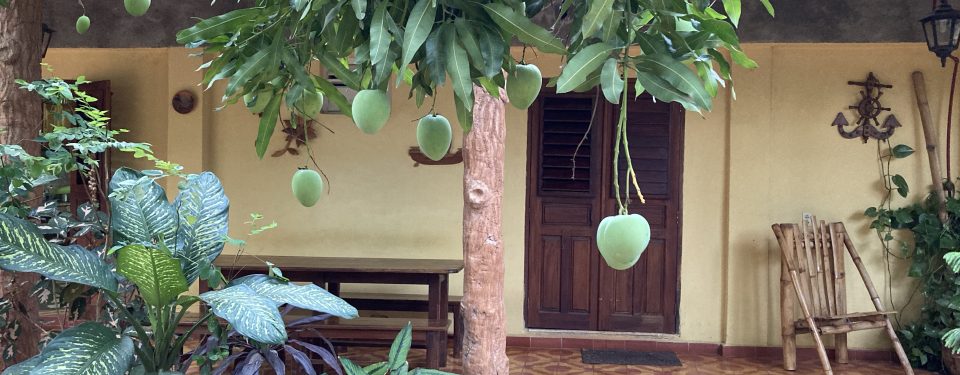
A typical cuban meal might include a soup (caldo) full of vegetables including corn, followed by roast or pulled pork, fried chicken or grilled fish, served with kidney bean stew (frijoles) and root vegetables (malanga, yam, boniato), double fried banana (tostones), steamed casava (yuka) with garlic and lime juice, steamed rice and a mixed salad of tomato, avocado, cucumber, cabbage, lettuce, green beans, beetroot, okra and radish. Dessert would usually be a creme caramel (flan) or a mild fetta (queso blanco) with guava paste (dulce de guayaba) . Guacamole served with banana chips, homemade hot sauce and mango chutney , banana chocolate cake and bread and butter puddin are almost always on the menu at Casa Los Mangos.
Cubans love their coffee, strong and black with sugar. It is customary to offer a shot of coffee (cafe) to every visitor that comes to the house and it is never refused. Black tea is scarce (so best to pack some if this is your preference) whilst every Cuban has a recipe for a herbal tea to cure all kinds of ailments from a cold or flu to high blood pressure. Blenders are an appliance found in all Cuban kitchens producing delicious fruit smoothies with natural yogurt or fruit milk shakes (batidos) and juices. Batidos are sold from kiosks (often the front room of a house) and in most restaurants and bars. Take your pick of mango, banana (platano), sapote (mamey), papaya (fruita bomba), pineapple (pina), custard apple (chirimoya), guanabana, guava (guayaba), watermelon, lime, passionfruit (maricuya), tamarind, star fruit (carambola) and/or coconut, depending on the season. My favourite is mamey, an exotic fruit with a slight coffee or chocolate flavour which grows on huge trees in the mountains behind Trinidad. It resembles an avocado in shape, is creamy in texture, similar in colour to papaya with a soft skin like a Kiwi Fruit when ripe.
Street food staples include croquettes, corn fritters, fried root vegetables (cassava, sweet potato, taro), banana chips, popcorn, pizza, hamburgers, roast pork buns, ice cream, merengues, churros, guava empanadas, peanut brittle, butter biscuits and cake. In some places you can also find fried rice, a hangover from the Chinese coolies that were brought to Cuba in the 19th Century. Fruit and vegetables are sold from kiosks and street carts and in Trinidad every Saturday there is a fresh produce/farmers market.
It always cocktail hour in the tropics, when you are on holidays. Cuba has more than a few iconic drinks to choose from like the mojito, daiquiri and Cuba libre. I personally prefer the Canchanchara: honey and lime with a shot of rum on ice served in a small pottery cup. There are a number of locally brewed beers including Cristal and Buccanero and a popular local cola called tuKola. For children and those who prefer alcohol free, a virgin Pina Coladas is a delicious alternative. If you prefer something stronger then you can choose from a wide selection of white and dark, aged and spiced rums on ice. The signature drink at Casa Los Mangos is not surprisingly a mango daiquiri. It can double as a deliciously refereshing dessert.
Cuban cooks flavour their food with onions, garlic, Spanish thyme, garlic chives, sweet peppers and salt. As a rule the dishes are not spicy, however, hot peppers are grown on the island and the art of making home made hot sauce is becoming much more popular. A wide variety of herbs like basil, rosemary, parsley, lemon grass and mint and spices such as ginger and tumeric, cinnamon, nutmeg and cloves are available. Most have traditionally been used for medicinal purposes but are now considered culinary ingredients. Tourism has encouraged the increase in privately owned restaurants, bars and cafe’s and influenced the introduction of new food and recipes and slightly tinkered with old favourites to satisfy foreign tastes, including those of vegetarians and vegans.
Once travellers tales were full of negative dining experiences. I suspect these were the consequence of an all inclusive holiday in a hotel or resort rather than staying in a Casa Particular (B&B) and eating in a paladar (private restaurant). There is an abundance of good places to eat and plenty of online recommendations. The best breakfasts are provided in Casa Particulars/B&B’s and sometimes a home cooked meal is better value for money and very tasty. At Casa Los Mangos we grow a wide varity of fruit, herbs and spices, seasonal vegetables and pulses and raise chickens free range for eggs. Dairy products, meat, rice, coffee are sourced locally. Jams, bread and cakes, sauces and dips are homemade.
Note: there has been much written in the international press of late about food shortages in Cuba. The Cuban economy is suffering a financial crisis set off by the Covid 19 pandemic, harsh US sanctions, the Trump Administration placing Cuba on a list of state sponsors of terrorism and other external and internal economic factors. Some sectors of Cuban society, particularly state workers and the retired, are adversely effected by the high prices on imported and local goods. There has, however, been an increase in the number of registered small and medium sized private businesses many of whom are importers, retailers or producers of food and domestic products. Tourism now benefits from a wide variety of privately owned small businesses including general stores, speciality shops such as bakeries and ice creameries, fresh produce kiosks, restaurants, bars and cafe’s.


 Casa Los Mangos